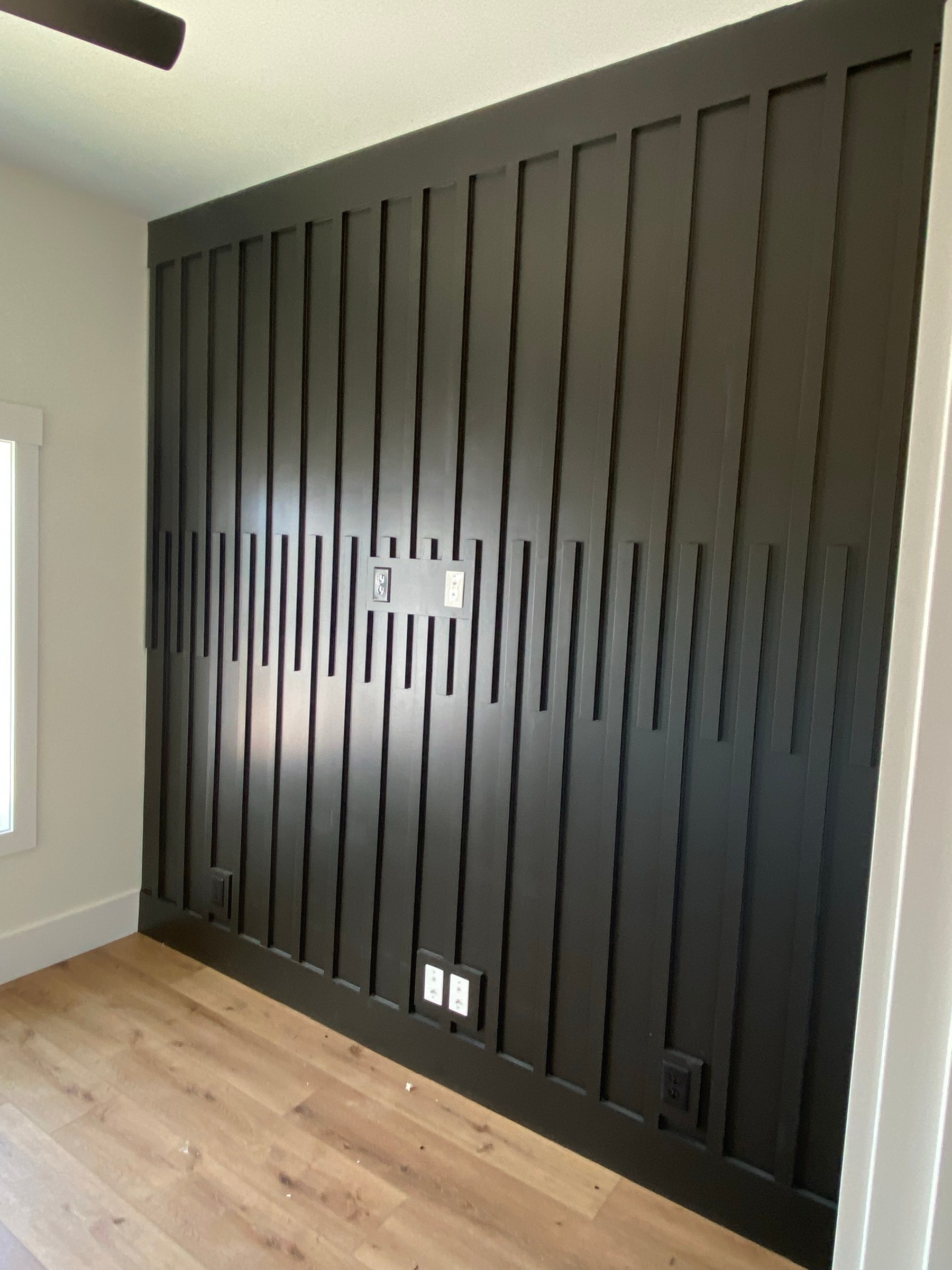
We take on the right homeowner projects.
Our business is general contractors and cabinet shops. The homeowner work we take is a narrow slice: defined, install-only projects with a $2,000 minimum — accent walls, wainscoting, a whole-house trim upgrade, or cabinets to set. For a small repair or a few feet of trim, you want a handyman; that's not what we do.
Who We Are
Our business is builders. Homeowner work is the exception.
Dunn Trim Co. is a business-to-business trim outfit. Most weeks we’re running the finish carpentry on custom homes and commercial jobs for general contractors and cabinet shops. We take on a little homeowner work, held to that same standard, but it’s a narrow slice: a real project with a defined scope and a $2,000 minimum. We don’t take odd jobs. A single door, a few feet of trim, or a patch is handyman work, and a good handyman will take better care of you on it than we would.
The Homeowner Work We Take
Defined projects, not odd jobs.
If it’s a real project with a defined scope, we’re a fit. We’re install-only, so the material comes from you or your supplier, delivered to the site, and we set it. The four that come up most:
Building your own home?
If you’re acting as your own general contractor — running the job and lining up the trades yourself — we’ll work with you the way we work with any builder. Hand us the trim scope and we’ll run it.
Not a fit
Small repairs, a single door or window, a few sticks of trim, a patch job: anything under the $2,000 minimum. For work like that a good handyman is the right call. It’s not our trade, and we’ll say so up front.
How It Works
Straightforward, start to finish.
Consult
Tell us what you want done and where, and we'll tell you quickly whether it's a fit. We turn the small stuff down.
Scope & quote
We scope the work and put a written number to it. You'll know what's included before anything starts.
Deposit & schedule
A deposit locks your spot on the schedule. We give you a real install window and keep you posted as it gets close.
Install
We keep the dust down, clean up when we're done, and walk the job with you at the end. Same standard we run on a builder's job.
Need design help first — layout, materials, the overall look? We’ll refer you to an interior-design partner we trust, then install their plan. Design isn’t our trade, so we hand it off to someone who does it.
In Detail
What makes it a real trim job.
Anybody can nail trim to a wall and caulk the gaps — that part’s easy. The real work is the stuff you don’t see. We cope the inside corners so they stay tight when the house moves, glue and pin the outside miters so they don’t open up a season later, and fasten into framing instead of just drywall so nothing works loose. It takes longer. We do it on every job.
What actually separates a finish carpenter from a handyman
Inside corners get coped instead of just mitered, so they stay tight when the wood moves and the house settles. Outside miters are glued and pinned so they don’t open up a season later. Long runs get scarfed on an angle rather than butted, so the joint doesn’t show. And wherever the trim carries load it’s fastened into framing or solid blocking, not just tacked to drywall, so nothing works loose. We hang and set the trim; filling the nail holes and painting is left to the finisher, which is its own trade.
What each project actually involves
- Accent walls come down to layout. Board-and-batten needs even batten spacing worked out to the wall’s real width and the outlets in it, the battens set flush and plumb, and a level rail across the top. Slat walls need consistent gaps and a flat substrate behind them. Picture-frame molding is all proportion and symmetry, and shiplap needs a straight starting course and a plan for how the corners land.
- Wainscoting runs from a single-height wrap with a cap and base up to full raised-panel work. The taller and more layered it gets, the more the panel layout has to be worked around the room’s out-of-square walls.
- Trim & molding upgrades mean pulling the builder-grade trim and running taller baseboard, real casing, and crown in its place.
- Built-ins & cabinet installation means setting a built-in from a plan, or installing cabinets you’ve already bought — brought level, scribed to the wall, and screwed into the studs, whether or not we sold them.
Why we quote instead of posting a price
An accent wall and a full wainscoting run aren’t the same job, so a flat price list wouldn’t mean much. What moves a quote is real: the size and height of the wall, what’s behind it, the material and whether it’s paint- or stain-grade, and how far out of square the room is. Send us the plans or tell us what you want done, and we’ll put a written number to it before anything starts. New to any of this? Start with what finish carpentry actually is and the types of trim and moulding, then see our custom accent and wainscoting work up close.
Why homeowners choose us
The difference is in the details you’ll stare at for years.
Builders keep us busy because the corners stay tight, the reveals line up, and the cabinets are scribed right to the wall. It’s the same work we bring to a house. The details that matter most are the small ones: a miter that closes tight instead of showing a hairline, the same reveal held all the way around a window or door casing, a piece of casing that meets the floor instead of sitting a quarter inch off it. Nobody else points those out, but you live with them for years. Trim is permanent and it sits at eye level. We set it every day.
Questions
What homeowners ask first.
Got a project that fits?
A defined trim or cabinet project, $2,000 and up — an accent wall, a wainscoting run, a whole-house trim upgrade, or cabinets to set. Tell us about it and we'll let you know fast whether it's a fit. For a small repair or an odd job, a handyman is the better call.